

Iris formosana — Iris de Formose
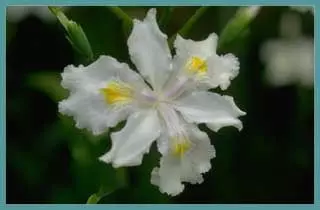
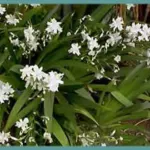
A vigorous evergreen rhizomatic iris found in shaded woodland areas by Ohwi in 1935 in Taiwan. Its attractive ribbed leaves are bundled in large fans. In half shaded positions and light well drained soil it will spread very rapidly by underground stolons. The plant is quite similar to I. japonica , but I. formosana is much larger and it thought to be a triploid form of I. japonica . Under favourable conditions, the attractive white flowers appear from the autumn throughout the winter until late spring. Only the flowers resemble I. confusa and I. japonica.
The genus
Iris is a very large genus from the Northern hemisphere with about 300 rhizomatous or bulbous species. There are 6 sub-genus, each of which is again divided in sections. Examples of subgenera: Iris (rhizomes, bearded flowers), Limniris (rhizomes, flowers without beard), Nepalensis, Xiphium (bulb), Scorpiris (Juno), Hermodactyloides (the Reticulatas).
- Family :Iridaceae
- Common name : Iris de Formose
- Section :Limniris (Lophiris)
- Native to :Taiwan
- Native climate :sub tropical (regular rainfall)
- Colour :White
- Hardiness :good
- Exposure :sheltered, half-shade
- Storage organ :rhizome
- Growth :evergreen
- Flowering height :40-70 cm
- Uses :Borders - Humides places - In the ground - Woodland - Glasshouse
Growing cycle
| Jan | Feb | Mar | Apr | May | Jun | Jul | Aug | Sep | Oct | Nov | Dec | |||||||||||||||||||||||||||||||||||||
|---|---|---|---|---|---|---|---|---|---|---|---|---|---|---|---|---|---|---|---|---|---|---|---|---|---|---|---|---|---|---|---|---|---|---|---|---|---|---|---|---|---|---|---|---|---|---|---|---|
| Planting | ||||||||||||||||||||||||||||||||||||||||||||||||
| Growth | ||||||||||||||||||||||||||||||||||||||||||||||||
| Flowering | ||||||||||||||||||||||||||||||||||||||||||||||||