

Crocus cancellatus
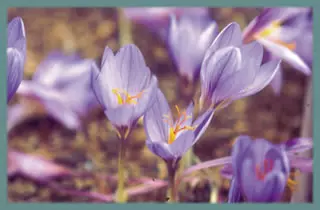
Stony places, thin pinewoods, over limestone Finely netted corm tunic, Much divided style which exceeds the anthers. The different subspecies of Crocus cancellatus can be difficult to tell apart. The ability to discern a bract (and bracteole) can be necessary. This is probably the easiest subspecies of Crocus cancellatus to cultivate in gardens. Where a warm, dryish summer rest can be guaranteed this plant can be grown in a well drained spot in the open. A plant sometimes seen in commerce as Crocus cancellatus var cilicus is this subspecies.
The genus
These are no ordinary Crocus. This selection will brighten the autumn until the spring comes along. After the autumn flowering species, other species will emerge for Christmas until the ordinary Crocus hybrids take over by the end of february. Their ability to close the flowers during adverse conditons (rain, frost or wind) helps significantly to prolong their flowering period. Also due to the lower winter temperatures, some species remain in flower for at least a month, while in February and March the well known Crocus chrysanthus hybrids will only last a few days here. Most Crocus will perform also very well in pots. To learn more about the genus Crocus please vivist the web site of the Crocus group: http://www.thealpinehouse.fsnet.co.uk/crocus%20pages/
- Family :Iridaceae
- Native to :Grèce, Turquie S Turkey; Liban, Israël
- Native climate :méditéranéen (humid winters)
- Colour :Blue
- Exposure :full sun
- Growth :winter grower
- Flowering height :15-40 cm
- Uses :Borders - Rockery - Containers or pot - In the ground - Naturalising
Growing cycle
| Jan | Feb | Mar | Apr | May | Jun | Jul | Aug | Sep | Oct | Nov | Dec | |||||||||||||||||||||||||||||||||||||
|---|---|---|---|---|---|---|---|---|---|---|---|---|---|---|---|---|---|---|---|---|---|---|---|---|---|---|---|---|---|---|---|---|---|---|---|---|---|---|---|---|---|---|---|---|---|---|---|---|
| Planting | ||||||||||||||||||||||||||||||||||||||||||||||||
| Growth | ||||||||||||||||||||||||||||||||||||||||||||||||
| Flowering | ||||||||||||||||||||||||||||||||||||||||||||||||