

Iris spuria forme bleu pale
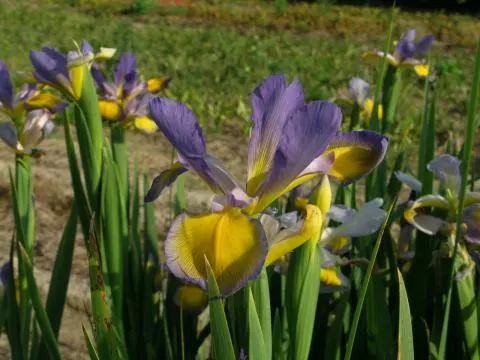
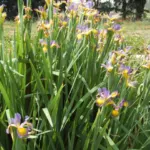
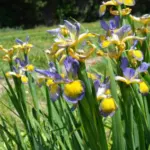
A late flowering iris which is easy to grow even on poor soils . The upright narrow leaves are replaced by new growth after a short dormancy period in August. Iris orientalis (also known as I ochroleuca) is often persists for decades in abandoned farms or gardens, where a patch of white and yellow or along a fence row marks the spot This iris has been remarkable by his adaptability to our garden and his flowering with an extraordinary combination of colours
The genus
Iris is a very large genus from the Northern hemisphere with about 300 rhizomatous or bulbous species. There are 6 sub-genus, each of which is again divided in sections. Examples of subgenera: Iris (rhizomes, bearded flowers), Limniris (rhizomes, flowers without beard), Nepalensis, Xiphium (bulb), Scorpiris (Juno), Hermodactyloides (the Reticulatas).
- Family :Iridaceae
- Section :Limniris (Spuriae)
- Native to :Europe
- Native climate :méditéranéen (humid winters)
- Colour :Yellow, Blue
- Hardiness :good
- Exposure :full sun
- Storage organ :rhizome
- Growth :evergreen
- Flowering height :70-100 cm
- Uses :Borders - Cut flowers - Naturalising - In the ground
Growing cycle
| Jan | Feb | Mar | Apr | May | Jun | Jul | Aug | Sep | Oct | Nov | Dec | |||||||||||||||||||||||||||||||||||||
|---|---|---|---|---|---|---|---|---|---|---|---|---|---|---|---|---|---|---|---|---|---|---|---|---|---|---|---|---|---|---|---|---|---|---|---|---|---|---|---|---|---|---|---|---|---|---|---|---|
| Planting | ||||||||||||||||||||||||||||||||||||||||||||||||
| Growth | ||||||||||||||||||||||||||||||||||||||||||||||||
| Flowering | ||||||||||||||||||||||||||||||||||||||||||||||||