

Hyacinthoides lingulata (forme tardive) ciliolata
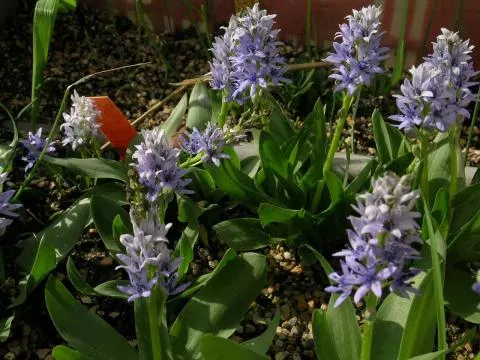
Forme à floraison tardive en fin octobre , avec une tige florale portant un corymbe constitué d'une vingtaine de fleurs bleu pâlecé. Feuillage courte apparait en même temps . Son bulbe charnu indique son appartenance au genre Hyacinthoides. Nettement plus grand et plus attractif que Scilla autumnalis . a traduire
The genus
Very close to the genius Hyacinthus, but the actual bulb is quite different: ressembles a tuber and is renewed every year. Flowers are campanulate and appear generally later than those of Hyacintus. Occurs naturally in woodlands in Spain and North Africa, and makes a good border plant in shaded or half shaded situations.
- Family :Hyacinthaceae (Liliaceae)
- Native to :Afrique du Nord (Nord de Tunisie)
- Native climate :méditéranéen (humid winters)
- Colour :Blue
- Hardiness :good
- Exposure :half-shade
- Storage organ :bulb
- Growth :winter grower
- Flowering height :0-15 cm
- Uses :Wild prairies - In the ground - Containers or pot - Rockery
Growing cycle
| Jan | Feb | Mar | Apr | May | Jun | Jul | Aug | Sep | Oct | Nov | Dec | |||||||||||||||||||||||||||||||||||||
|---|---|---|---|---|---|---|---|---|---|---|---|---|---|---|---|---|---|---|---|---|---|---|---|---|---|---|---|---|---|---|---|---|---|---|---|---|---|---|---|---|---|---|---|---|---|---|---|---|
| Planting | ||||||||||||||||||||||||||||||||||||||||||||||||
| Growth | ||||||||||||||||||||||||||||||||||||||||||||||||
| Flowering | ||||||||||||||||||||||||||||||||||||||||||||||||
Planting :July (sem. 1-4), August (sem. 1-4), September (sem. 1-4), October (sem. 1-1)
Growth :January (sem. 1-4), February (sem. 1-3), March (sem. 1-4), April (sem. 1-3), November (sem. 1-4), December (sem. 1-3)
Flowering :October (sem. 4-4), November (sem. 1-3)