

Iris spuria aurea/jaune
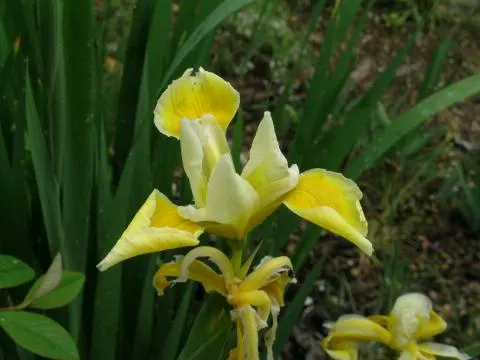
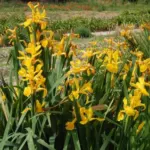
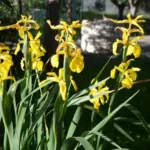
Its flowering is late and follows that of the bearded irises. 2-3 flowers per stem; good as a cut flower. The narrow, upright foliage is renewed after a short dormancy in late summer. Leave it undisturbed, as it becomes more free-flowering as the clump ages. Iris orientalis (also called I. ochroleuca) is often found on abandoned farms or gardens, where patches or borders mark its former location. Recommended for covering banks or a wild corner. 2-3 flowers per tall flower stem; good as a cut flower. (not to be confused with I. pseudacorus = water iris, which is smaller but flowers at the same time)
The genus
Un très vaste genre de l'hémisphère Nord qui compte approximativement 300 espèces bulbeuses ou rhizomateuses. Le genre est divisé en 6 sous-genres eux-mêmes déclinés en plusieurs sections. Exemples de sous-genres: Iris (rhizome, fleurs avec barbe), Limniris (rhizome, fleurs sans barbe), Nepalensis, Xiphium (bulbe), Scorpiris =Juno (bulbe), Hermodactyloides= Reticulata (bulbe).voir SFIB 136 p 18
- Family :Iridaceae
- Section :Limniris (Spuriae)
- Native climate :méditéranéen (humid winters)
- Colour :Jaune
- Hardiness :good
- Exposure :soleil
- Storage organ :rhizome
- Growth :winter grower
- Flowering height :70-100 cm
- Uses :Bordures - Fleurs coupées - Pour naturaliser - En pleine terre
Growing cycle
| Jan | Feb | Mar | Apr | May | Jun | Jul | Aug | Sep | Oct | Nov | Dec | |||||||||||||||||||||||||||||||||||||
|---|---|---|---|---|---|---|---|---|---|---|---|---|---|---|---|---|---|---|---|---|---|---|---|---|---|---|---|---|---|---|---|---|---|---|---|---|---|---|---|---|---|---|---|---|---|---|---|---|
| Planting | ||||||||||||||||||||||||||||||||||||||||||||||||
| Growth | ||||||||||||||||||||||||||||||||||||||||||||||||
| Flowering | ||||||||||||||||||||||||||||||||||||||||||||||||