

Ranunculus ficaria — Ficaire, Speenkruid, Celandine

Ben Zonneveld:. The double form does not make bulbils and the
same is true for most cultivars and these are easier to remove.
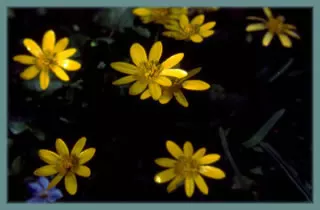
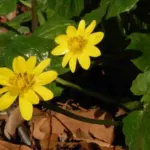
J.J Flintoff: Your large -flowered robust lesser celandine is Ranunculus ficaria ssp
ficariiformis. It is sometimes called R f ' Major ' in older horticultural
literature. The smaller weedy one is R f ssp bulbifer which has bulbils in the leaf
axils allowing it to spread in an alarming way. It is this form which gives the
species a bad name.
Many of the choicer cultivars are derived from R ficaria ssp ficaria
which doesnt have the above-ground bulbils. They however must be dead-headed to
prevent spreading by seeds. Many are worth the effort.
The genus
A TRADUIRE
- Family :Ranunculaceae
- Common name :Ficaire, Speenkruid, Celandine
- Native to :Europe, Proche Orient
- Native climate :méditéranéen (humid winters)
- Colour :Yellow
- Hardiness :good
- Exposure :half-shade, full sun
- Storage organ :rhizome with tuberous roots
- Growth :winter grower
- Flowering height :0-15 cm
- Uses :Rockery
Growing cycle
| Jan | Feb | Mar | Apr | May | Jun | Jul | Aug | Sep | Oct | Nov | Dec | |||||||||||||||||||||||||||||||||||||
|---|---|---|---|---|---|---|---|---|---|---|---|---|---|---|---|---|---|---|---|---|---|---|---|---|---|---|---|---|---|---|---|---|---|---|---|---|---|---|---|---|---|---|---|---|---|---|---|---|
| Flowering | ||||||||||||||||||||||||||||||||||||||||||||||||
Flowering :January (sem. 4-4), February (sem. 1-4), March (sem. 1-2)