

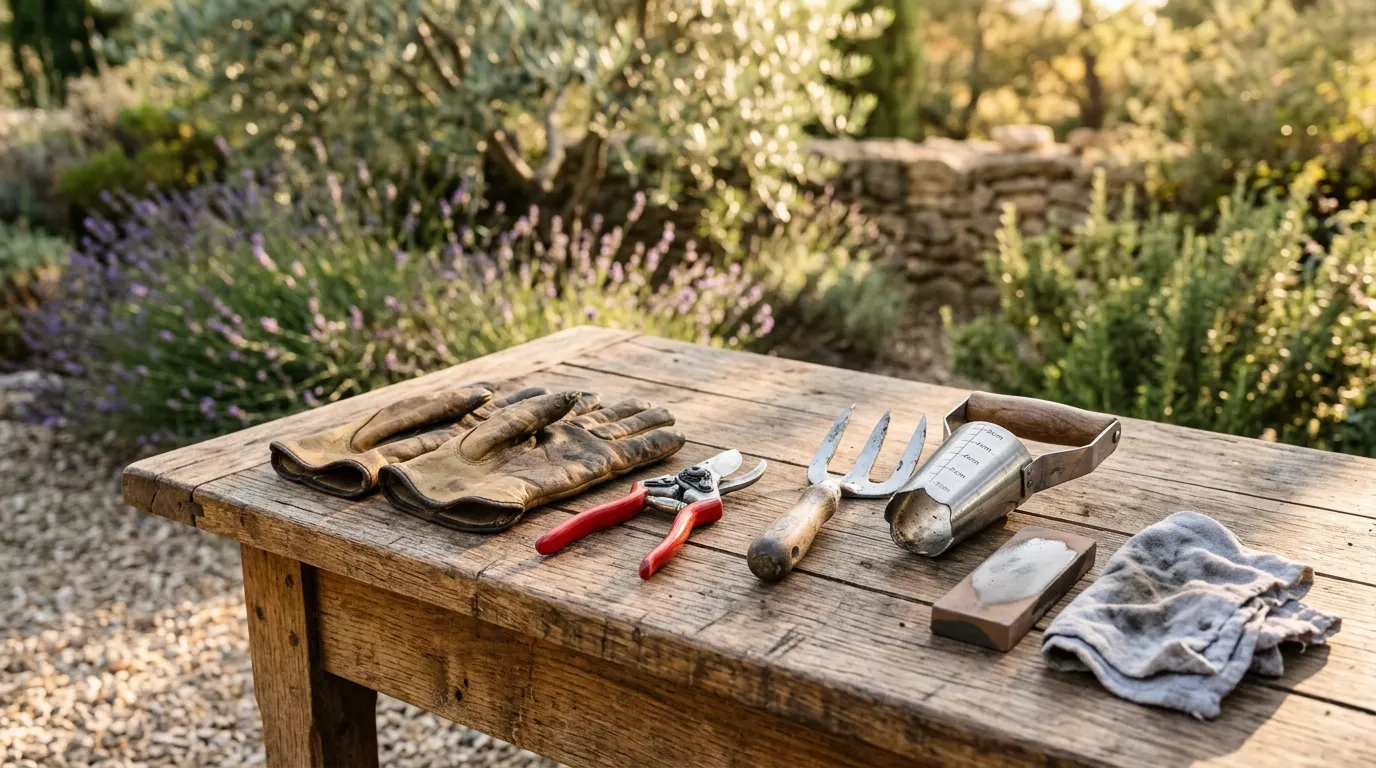
Late summer brings a welcome lull in the garden, just before autumn’s busy pace picks up: dividing perennials, planting spring bulbs, and the last formative pruning before winter rest. It’s the perfect moment to check on your tools, which have often worked hard since spring. A few simple maintenance habits are enough to keep them efficient and make them last much longer.
Clean tools after every use
Dried soil, sticky sap, or debris from a diseased plant left on a blade encourage rust and spread disease from one bed to another. A stiff brush and a cloth are enough for a quick clean after each session; for secateurs that have cut a diseased plant, a wipe with rubbing alcohol prevents any contamination.
Sharpen blades and secateurs before autumn
September brings the season of dividing clumps and giving shrubs their last shaping cut. A dull blade crushes stems instead of slicing them cleanly, weakening the plant and slowing healing. A sharpening stone or a flat file, run a few times at the right angle, brings your secateurs back to full precision.
Choose the right tool for each task
A graduated bulb planter guarantees a consistent planting depth and saves hours of digging by hand. To divide well-established clumps without damaging their roots, such as iris or dahlias, a garden fork is far gentler than a straight spade.
Protect metal parts from rust
Before long-term storage, wipe metal parts thoroughly, then apply a thin coat of oil (linseed or sunflower oil) with a cloth. This simple step creates a barrier against moisture and keeps your tools from seizing up over winter.
Store tools away from damp
A bare earth floor or a damp corner of the shed is enough to rust even a well-cared-for tool. Choose hanging storage on wall hooks instead: it keeps blades off the ground and away from moisture, and saves you nasty surprises when walking through the shed.