

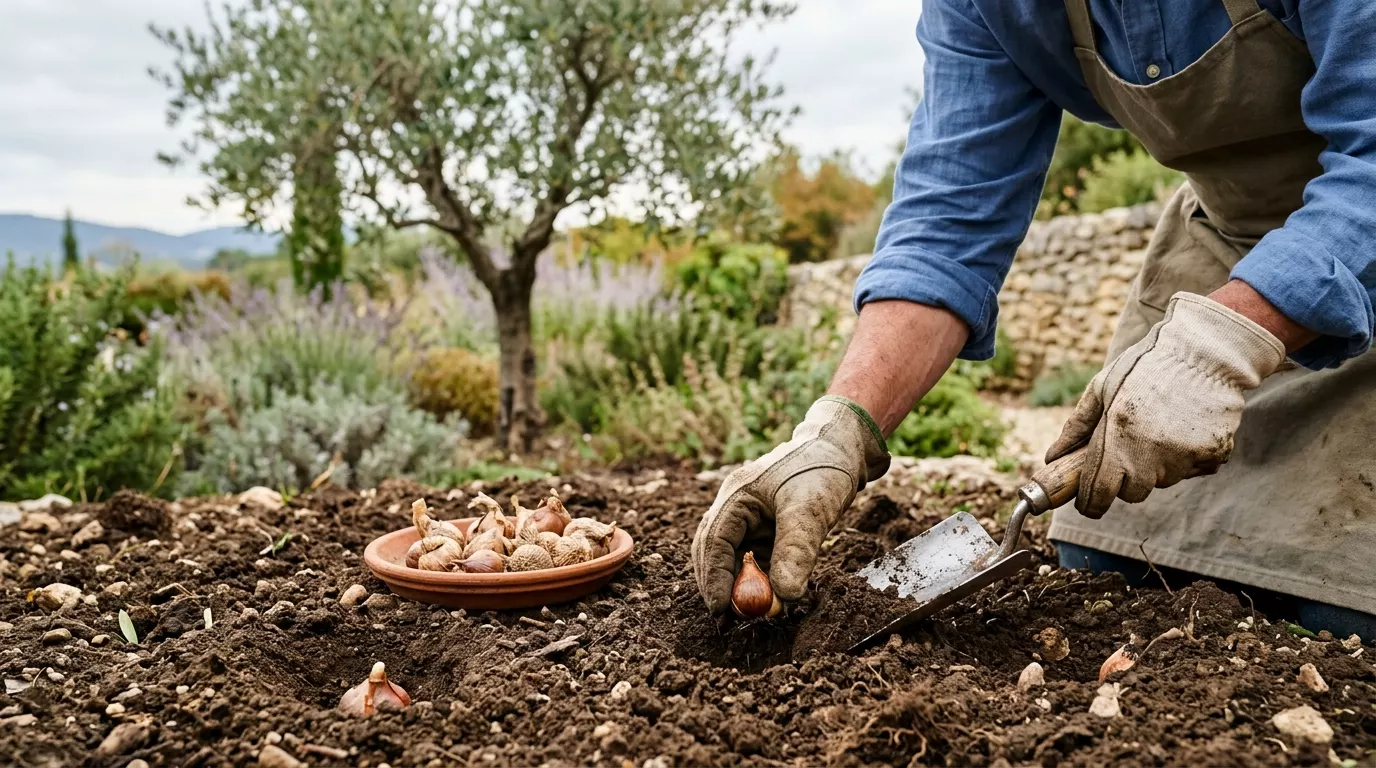
After the intense heat of summer, September marks a real turning point in the Provençal garden: temperatures ease, rain gradually returns, and it’s the signal spring bulbs have been waiting for. Some are ready to go into the ground now, others still need patience, and a few take advantage of this very month to bloom without any help at all. Here’s how to make sense of it all.
Plant Crocus and Botanical Narcissi Now
Small-flowered crocus and botanical narcissi such as Narcissus bulbocodium are among the few spring bulbs you can plant as early as September. Choose a well-drained spot in full sun or light partial shade, and plant at a depth of roughly three times the bulb’s height. These species like to settle in early: they grow roots before winter and reward you with a fuller bloom the very first spring.
Start Naturalising with Muscari and Scilla
For a carpet effect under trees or in a lawn, now is the time to plant muscari and scilla in generous quantities. Scatter the bulbs by hand and plant them where they land rather than in neat rows: that natural-looking scatter is exactly what will create, a few years from now, the wildflower-meadow look so many gardeners chase.
Let Colchicum and Sternbergia Bloom in Peace
If pink or yellow flowers pop up with no leaves in sight, don’t worry: colchicum and sternbergia bloom precisely at this time of year, before their foliage appears the following spring. Don’t water or trim them; simply enjoy this surprise bloom, a hallmark of Mediterranean bulbs.
Hold Off on Tulips a Little Longer
Contrary to popular belief, now is not the time to plant tulips: the soil is still too warm, which favours fungal problems and weakens the bulbs. Reserve your favourite varieties now if you haven’t already, but keep them cool and dry until November, once the soil has properly cooled down.
Following this calendar gives every bulb the best possible start, without rushing the ones that need to wait. Next spring’s garden begins now, one bulb at a time.