

Asphodelus aestivus
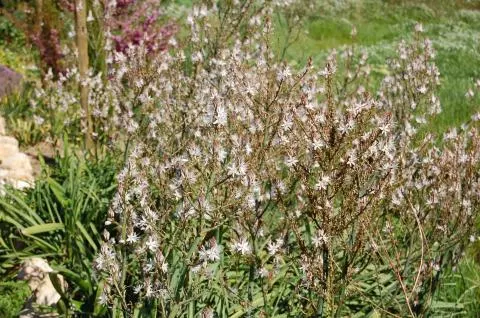
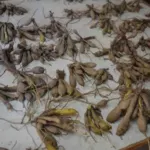
These species are often found around the Mediterranean, on beaches or further inland. They bear numerous white flowers with a brown line. According to Homer, the asphodel is the immortal flower of the Elysian Fields, and nowadays it is traditionally used at funerals. A claw made up of 6-10 short, thick tuberous roots, similar to those of Dahlia and Eremurus. These species are often found around the Mediterranean, on beaches or further inland along roadsides or on sunny hillsides. The appearance of the plant is reminiscent of an Eremurus, but the inflorescence is branched and bears numerous white flowers with a brown line. A fine, sturdy plant for any well-drained, sunny position.
SOLD OUT OCT 20
The genus
On rencontre ces espèces souvent sur le pourtour méditerranéen, sur les plages ou plus à l'intérieur. Porte de nombreuses fleurs blanches avec une ligne brune. Selon Homère, l'asphodèle est la fleur immortelle dans l'Elysium et de nos jours utilisée traditionnellement aux enterrements.
- Family :Asphodelaceae
- Native climate :méditéranéen (humid winters)
- Colour :Blanc
- Hardiness :good
- Exposure :soleil
- Storage organ :rhizome with tuberous roots
- Growth :winter grower
- Flowering height :100-150 cm
- Uses :Bordures - Pour naturaliser - En pleine terre - Rocaille
Growing cycle
| Jan | Feb | Mar | Apr | May | Jun | Jul | Aug | Sep | Oct | Nov | Dec | |||||||||||||||||||||||||||||||||||||
|---|---|---|---|---|---|---|---|---|---|---|---|---|---|---|---|---|---|---|---|---|---|---|---|---|---|---|---|---|---|---|---|---|---|---|---|---|---|---|---|---|---|---|---|---|---|---|---|---|
| Planting | ||||||||||||||||||||||||||||||||||||||||||||||||
| Growth | ||||||||||||||||||||||||||||||||||||||||||||||||
| Flowering | ||||||||||||||||||||||||||||||||||||||||||||||||