

Gladiolus illyricus
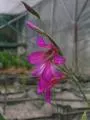
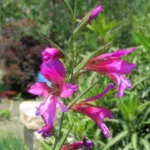
Taller abnd with laerger flowers than G.italicus. Gladiolus illyricus has aslender stem, usually not branched but sometimes with one. flowers 4-5 cm. magenta purple with lower 3 lobes with white lanceolate marks tube curved lower tepals 3 clawed. Here are some postings of the IBS forum: J Waddick 2/99: According to the European Garden Flora Vol 2 G. italicus differs from G. communis with the former having anthers longer than filaments, the latter having anthers equal or shorter than filaments. 2 subs of G. communis: G. communis c. Flowers rather loosely spaced-usually pink G. c. byzantinus Flowers rather closely set usually deep purplish red G. illyricus - shorter than communis (50 cm max) and 10 flowers or less. G. palustris - similar to G. imbricatus reddish purple flowers in one row, under 50 cm loose spike of 2 to 6 flowers. Tolerates more moisture
The genus
The popular horticultural gladioli are mostly summer-flowering hybrids derived from species growing in subtropical regions with summer rain. Only two of these species and a cultivar are presented in our winter catalog. However, there is a very important section of winter-growing species from the Cape and the Mediterranean area. They are spring-flowering and very suitable for the Mediterranean climate and are available for planting in late summer or autumn. The South African winter-growing species are generally elegant rather than exuberant. Many have well-spaced tubular flowers rather than a lot of them crammed together.They also are very good pot plants.
- Family :Iridaceae
- Native to : Méditerranée occidentale
- Native climate :méditéranéen (humid winters)
- Colour :Pink
- Hardiness :good
- Exposure :full sun
- Storage organ :corm
- Growth :winter grower
- Flowering height :40-70 cm
- Uses :Naturalising
Growing cycle
| Jan | Feb | Mar | Apr | May | Jun | Jul | Aug | Sep | Oct | Nov | Dec | |||||||||||||||||||||||||||||||||||||
|---|---|---|---|---|---|---|---|---|---|---|---|---|---|---|---|---|---|---|---|---|---|---|---|---|---|---|---|---|---|---|---|---|---|---|---|---|---|---|---|---|---|---|---|---|---|---|---|---|
| Planting | ||||||||||||||||||||||||||||||||||||||||||||||||
| Growth | ||||||||||||||||||||||||||||||||||||||||||||||||
| Flowering | ||||||||||||||||||||||||||||||||||||||||||||||||