

Lilium candidum — Lis de Madonne, 'Giglio di Sant Antonio'
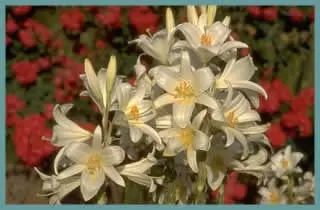
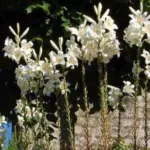
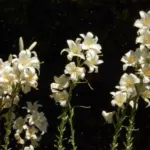

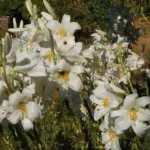
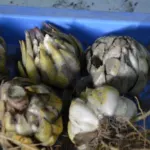
Lilium candidum, however, a typical wintergrower is particularly adapted to the mediterranean climat. This ancient lily, which is often found in old gardens, monastries and churchyards, is often associated with the Church (Lys de la Madonne in France and Giglio di San Antonio in Italy). No other flower is better suited to enlight these peaceful courts of meditation.
The bulb scales are used to make a ointment to treat wounds. The principal ingredients are saponines et polysaccharides. A lot of useful chemical information is available on the following website:
http://www.bioselect-us.com/Ingredients.aspx?IngrID=118
The genus
As most summer-growing lilies come from cooler mountainous areas, when grown in the Mediterranean climate they should be placed in half shaded positions. The bulbs are very resistant to frost and prefer to remain in the ground during the winter dormancy. The shallow roots of the lilies should be kept cool by using ground covers or a mulch. Soil should be light and well drained with a high organic matter content. A few winter-growing lilies are presented in our summer catalog.
- Family :Liliaceae
- Subfamily :Liliaceae
- Common name :Lis de Madonne, 'Giglio di Sant Antonio'
- Native to :Méditerranée
- Native climate :méditéranéen (humid winters)
- Colour :White
- Hardiness :good
- Exposure :half-shade
- Storage organ :bulb
- Growth :winter grower
- Flowering height :70-100 cm
- Uses :Borders - Cut flowers - In the ground - Woodland
Growing cycle
| Jan | Feb | Mar | Apr | May | Jun | Jul | Aug | Sep | Oct | Nov | Dec | |||||||||||||||||||||||||||||||||||||
|---|---|---|---|---|---|---|---|---|---|---|---|---|---|---|---|---|---|---|---|---|---|---|---|---|---|---|---|---|---|---|---|---|---|---|---|---|---|---|---|---|---|---|---|---|---|---|---|---|
| Planting | ||||||||||||||||||||||||||||||||||||||||||||||||
| Growth | ||||||||||||||||||||||||||||||||||||||||||||||||
| Flowering | ||||||||||||||||||||||||||||||||||||||||||||||||