

Moraea bifida
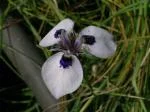
Category photo (no photo of its own for this entry)
Endemic to South Africa, Moraea bifida grows in the Western and Northern Cape provinces, from eastern Namaqualand and the western Karoo to Pakhuis Pass, on clay soils in renosterveld and fynbos vegetation. Its corm, about 15 to 20 mm in diameter, produces a single broad, channelled leaf clasping a stem 20 to 75 cm tall. In late winter and spring, salmon-pink or yellow flowers, finely speckled at the centre, open within green spathes. The species needs well-drained soil and full sun for good flowering, along with a strictly dry summer dormancy, in keeping with the winter-rainfall regime of its native range.
The genus
Almost all of the155 Moraea species occur south of the Sahara and about 2/3 south of the Zambesi /Cunene rivers. The majorty are wintergrowers and dormant in the summer, while about 40 species are summer rainfallgrowers originating from subtropical regions. Several Moraea have only a very small distribution area and are in danger of extinction. Fortunately those endangered species are now cultivated and are safeguarded from disappearing forever. Many species make good garden plants. Wintergrowers prefer mediterranean regions or pots elsewhere. The summer growers are also suitable for gardens in colder regions. The flower all have the typical "iris" form but with a most interesting variation of colours. A typical feature are the colourful nectar guides at the base of the outer petals especially designed to attract and guide the pollinators. Very few offshoots are formed and multiplication is largely by seed.
- Family :Iridaceae
- Section :Homeria
- Native to :Afrique du Sud (Cap)
- Native climate :méditéranéen (humid winters)
- Growth :winter grower
- Flowering height :0-15 cm
Growing cycle
No calendar data for this entry.