

Tulipa clusiana var Stellata ‘Lady Jane’ — Tulipe Radis , Lady Tulip
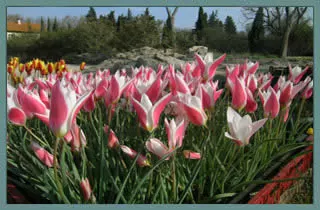
This is the very elegant real T. clusiana, which was formerly cultivated on the mediterranean shores for cut flowers. It is occasionally still found there, firmly persisting in old wild gardens. As it multiplies by stolones, it should be planted in freely drained, loose soil and not to be disturbed. 'Lady Jane' is problably derived from T. clusiana forma stellata , which has also a white centre. The red is slightly paler than T. clusiana f.clusiana
The genus
Four centuries ago the first tulips came from Turkey and central Asia. But the creation of the actual hybrids and selections has also been influenced by the botanical species from the mediterranean area (some examples are presented here). They tolerate high temperatures and resist to virus and other diseases, which makes them particularly interesting garden tulips for perenial plantings in warm climates. Many of these species use to grow in vine yards and olive groves and are now threatened with extinction due to the modern cultivation methods. All tulip species need a cold period before the leaves appear, which makes them hardy.
- Family :Liliaceae
- Subfamily :Liliaceae
- Common name :Tulipe Radis , Lady Tulip
- Native to :Iran, Iraq, Afghanistan, Tibet
- Native climate :méditéranéen (humid winters)
- Colour :White, Red
- Hardiness :good
- Exposure :full sun
- Storage organ :bulb
- Growth :winter grower
- Flowering height :40-70 cm
- Uses :Naturalising - In the ground - Containers or pot - Rockery
Growing cycle
| Jan | Feb | Mar | Apr | May | Jun | Jul | Aug | Sep | Oct | Nov | Dec | |||||||||||||||||||||||||||||||||||||
|---|---|---|---|---|---|---|---|---|---|---|---|---|---|---|---|---|---|---|---|---|---|---|---|---|---|---|---|---|---|---|---|---|---|---|---|---|---|---|---|---|---|---|---|---|---|---|---|---|
| Planting | ||||||||||||||||||||||||||||||||||||||||||||||||
| Growth | ||||||||||||||||||||||||||||||||||||||||||||||||
| Flowering | ||||||||||||||||||||||||||||||||||||||||||||||||