

Muscari macrocarpum — grape hyacinth
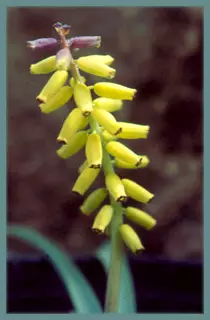
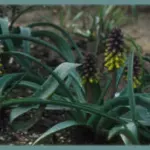
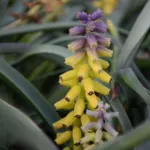
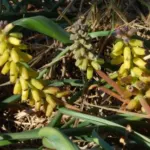
Classé dans le sous genre Muscarimia. Épi composé d'une quarantaine de petites urnes jaunes bordées de pourpre au parfum très doux. Multiplication uniquement par graines formées dans des capsules très décoratives. Culture en pot possible mais plus difficile.
Le genre
Genre bien connu des régions méditerranéennes et de Turquie, très proche aux genres Bellevalia et Leopoldia. Les petite fleurs tubulaires ("urnes") forment une compacte racème terminale.
"Pseudomuscari" se distingue par ces "urnes" florales ouvertes (tandis que les espèces du groupe (sous genre) Botryanthus ont des "urnes" presque fermées. Le sous groupe Muscarimia a des fleurs parfumées.
PBS wiki :The Muscarimia group has two species with large bulbs with thick fleshy perennial roots which delve down into the rocky ground of their natural habitat in Turkey and the east Aegean region. The stout stems carry racemes with large elongated flowers with six projections below the mouth. Flowers are fragrant and yellow or white, faintly tinted green or blue, with brown lobes which are so small that they are more like small teeth. Sterile flowers are few, minute and violet, or none. Since they come from hot sun baked hillsides they are best grown in a bulb frame or alpine house in a deep pot to accommodate their strong roots.
- Famille :Liliaceae
- Sous-famille :Hyacinthaceae
- Nom vernaculaire :grape hyacinth
- Pays d'origine :Grèce (Îles de la mer Égée)
- Climat d'origine :méditéranéen (hiver humide)
- Couleur :Jaune, Pourpre
- Rusticité :bonne
- Exposition :soleil
- Organe de réserve :bulbe
- Végétation :végétation hivernale
- Hauteur floraison :15-40 cm
- Utilisations :En pleine terre - Culture en pot - Rocaille
Cycle de végétation
| Jan | Fév | Mar | Avr | Mai | Jun | Jul | Aoû | Sep | Oct | Nov | Déc | |||||||||||||||||||||||||||||||||||||
|---|---|---|---|---|---|---|---|---|---|---|---|---|---|---|---|---|---|---|---|---|---|---|---|---|---|---|---|---|---|---|---|---|---|---|---|---|---|---|---|---|---|---|---|---|---|---|---|---|
| Plantation | ||||||||||||||||||||||||||||||||||||||||||||||||
| Végétation | ||||||||||||||||||||||||||||||||||||||||||||||||
| Floraison | ||||||||||||||||||||||||||||||||||||||||||||||||