

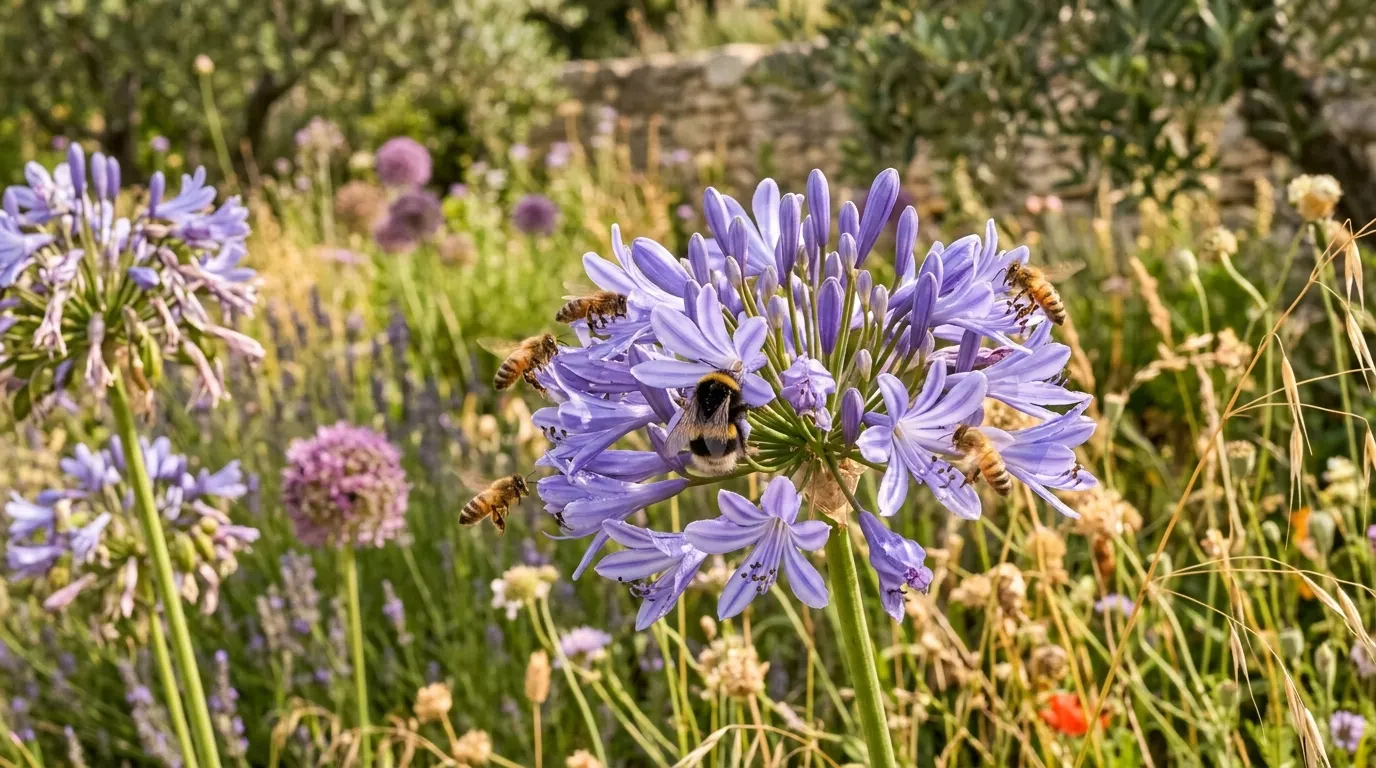
Bees, bumblebees and butterflies are especially active at this time of late summer, searching for the last flowers before autumn sets in. You don’t need a large plot to help them: a few simple habits in the garden are enough to offer them food and shelter, while supporting local biodiversity. Here are five easy ideas to put in place, even in a small space.
Choose flowers rich in nectar
Favour simple, open-cupped flowers, which are far more accessible to insects than double varieties that are often poor in pollen. Bulbs such as agapanthus or allium are excellent choices: their large flower heads gather hundreds of tiny blooms, a real buffet for foraging insects.
Spread flowering out across the season
A pollinator-friendly garden offers food from spring through to autumn. Rely on crocuses and grape hyacinths for the earliest bees of the year, then on dahlias and gladioli to keep the feast going until the first cold snaps.
Ban pesticides and chemical treatments
Insecticides, even targeted ones, also harm beneficial insects. Tolerate a few aphids or caterpillars, which in turn will feed the garden’s natural predators, and replace chemical treatments with nettle manure or soft soap only when truly needed.
Leave a wild corner
Set aside a small area that you neither mow nor weed. Dandelions, clover and other self-seeded flowers will grow there naturally and attract a wide range of wildlife. A pile of dead wood or a few stacked stones round out this makeshift shelter for insects and small animals.
Set up water and shelter
A simple dish filled with clay pebbles or pebbles poking above the waterline, kept regularly topped up, lets insects drink safely without the risk of drowning. Add an insect house or a bundle of hollow stems, which will serve as a refuge and a place to lay eggs.