

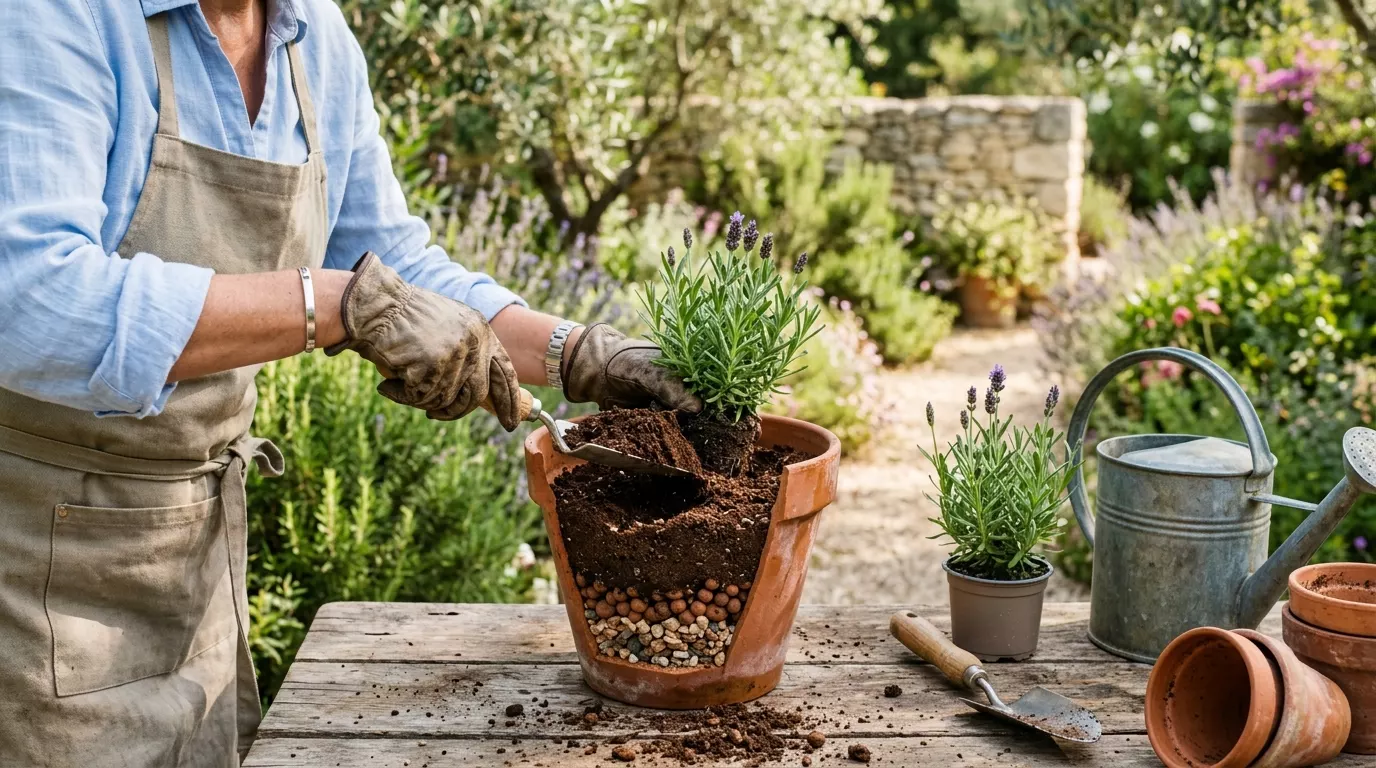
Passed down from one generation to the next, or picked up without much thought, some gardening habits die hard — even when science or plain experience proves them useless, or downright counterproductive. Here are five common myths worth dropping for good, for a healthier garden and less wasted effort.
Skip the Gravel Layer at the Bottom of Pots
Long recommended to “improve drainage,” a layer of gravel or clay pebbles actually does the opposite: water pools above it, in what’s called a perched water table, before slowly seeping into the potting mix. A well-draining potting soil and a pot with drainage holes are all you really need — save the gravel for mulching the surface instead.
Water Freely in Full Sun
The famous “magnifying glass” effect of water droplets on leaves in bright sunlight almost never actually scorches foliage: the water evaporates too quickly to focus the sun’s rays. Watering early morning or evening is still the better habit, though — not to prevent burns, but to reduce evaporation and let roots make the most of every drop.
Leave Pruning Cuts Open to the Air
Pruning sealant, tar, or wound paint were long considered essential after a cut, but these products actually trap moisture against the wood and encourage fungal growth. A clean cut, made in the right spot with a sharp, clean tool, heals better left open to the air.
Water Deeply and Less Often for Deeper Roots
Frequent, shallow watering trains roots to stay near the surface, where the soil dries out fastest. Deeper, more spaced-out watering instead encourages roots to reach down, where moisture stays available longer. Established agapanthus plants are a perfect example: once settled in, they can go several weeks without water in summer.
Always Keep the Soil Covered
Bare soil is never a good idea: it dries out faster, compacts under rain, and leaves the door wide open for weeds. Organic mulch, a low-growing ground cover, or even dried grass clippings — whatever you choose, keeping the soil protected pays off, even outside your flower beds.